

Sump Pump Check: Preparing for November Rains & Snow
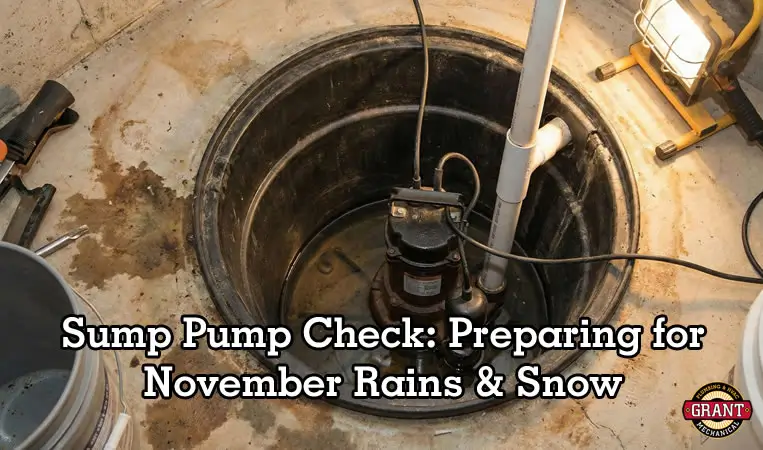
If you’ve lived in Traverse City for more than a year, you know the “Gales of November” aren’t just a line from a Gordon Lightfoot song—they are a weather reality. November in Northern Michigan is a transitional month. We often see a volatile mix of heavy autumn rains, the first significant snowfalls, and temperature swings that freeze the ground overnight.
Most homeowners diligently check their sump pumps in the spring when the big thaw hits. But at Grant Mechanical, we believe the “Second Check” in late autumn is just as critical.
Why? Because winter floods are often more damaging than spring ones. If your discharge line freezes or the power goes out during a November storm, you could be dealing with a flooded basement in the middle of freezing temperatures.
Here is your essential checklist to get your sump pump ready for the Michigan winter.
1. The "Pour Test" (Verify Mechanics)
Even if your pump worked fine in July, it may have seized up from inactivity during a dry spell in late summer.
- How to do it: Slowly pour a 5-gallon bucket of water into the sump pit.
- What to watch for: The float should rise freely, trigger the switch, and the pump should turn on immediately.
- Listen: It should sound smooth. Grinding or rattling noises could indicate a failing motor or jammed impeller. If the water doesn’t drain, or the pump hums but doesn’t pump, you need a repair immediately.
2. The Critical Step: Check the Discharge Line
This is the number one cause of winter basement flooding in our area. In the summer, you might have an extension hose attached to your discharge pipe to carry water far into your yard. In November, that hose becomes a liability.
- Disconnect Extension Hoses: If you leave a flat, vinyl extension hose connected when temperatures drop below freezing, water can trap inside, freeze, and create an ice block. This forces the pump to burn out or the water to back up into your basement.
- Inspect the Exit Point: Ensure the permanent pipe exiting your house is clear of leaves, debris, and animal nests.
- Look for “Ice Guard” Capability: We highly recommend discharge lines that have a slotted adapter (often called an ice guard or air gap) near the foundation. This allows water to escape near the house if the underground pipe freezes further down the line, saving your pump from burning out.
3. Clear the Pit
Over the summer, your sump pit can collect debris. Small stones, silt, or even children’s small toys can fall in.
- Clean it out: Scoop out any debris that has settled at the bottom of the pit. This debris can clog the pump intake or jam the impeller.
- Check the Float: Make sure the float switch isn’t obstructed by wires or pressing against the side of the pit. It needs free range of motion to turn the pump on and off.
4. Power Failure Plan: The Battery Backup
November storms bring high winds, and high winds bring power outages. If the power goes out during a heavy rain/snow mix, your primary electric sump pump stops working.
- Test your backup: If you have a battery backup system, check the battery fluid levels (if applicable) and run a test cycle.
- Consider installing one: If you don’t have a backup, now is the time. A battery backup system can be the difference between a dry basement and thousands of dollars in water damage during a blackout.
5. Listen to the Check Valve
When your pump shuts off, do you hear a loud “thud”? That’s water rushing back down the pipe and slamming against the check valve.
- Why it matters: A faulty check valve allows water you just pumped out to flow back into the pit, forcing the pump to run twice as often. This wears out the motor significantly faster.
- The Fix: If the valve is failing or making excessive noise, it’s an easy and inexpensive component for a plumber to replace.
Don't Want to Get Your Hands Dirty?
We get it. Crawling into a crawl space or reaching into a dark sump pit isn’t everyone’s idea of a fun Saturday afternoon.
If you are unsure about the age of your pump, or if you want the peace of mind that comes with a professional inspection, Grant Mechanical is here to help. We can:
- Inspect your primary pump and check valve.
- Install or test battery backup systems.
- Ensure your discharge configuration is winter-proof.
Don’t wait for the first basement puddle to think about your plumbing.
Contact Grant Mechanical today to schedule your plumbing inspection. Call us at (231) 943-2066 or visit us online.
Reliable. Professional. Local.

