

Stop the Drip Fixing Spring Leaks Before They Grow
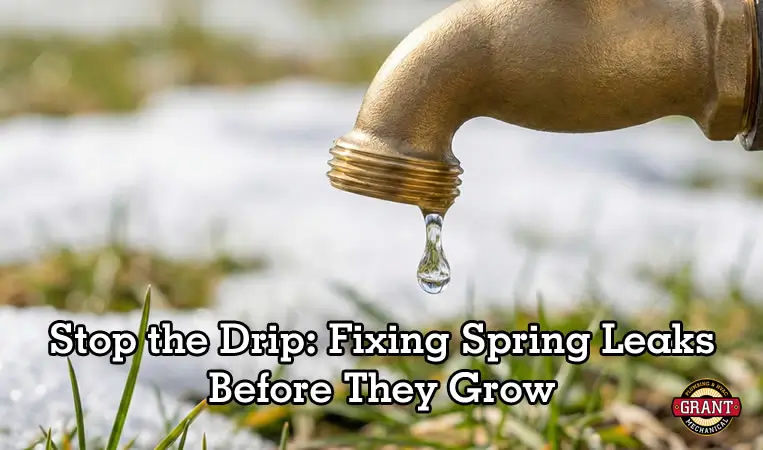
In Traverse City, we all look forward to the “Big Thaw.” There is nothing quite like watching the snow recede and feeling the first warm breeze off the bay. But for homeowners, the transition from a harsh Michigan winter to spring can reveal some unwelcome surprises—specifically, plumbing leaks.
As the ground thaws and temperatures fluctuate, your plumbing system undergoes significant stress. Small drips that went unnoticed during the deep freeze can suddenly turn into steady streams. At Grant Mechanical, we believe proactive maintenance is the key to a dry, happy home. Here is how to spot and stop those spring leaks before they cause major damage.
Why Does Spring Bring Leaks?
You might think winter is the most dangerous time for pipes, and while freezing is a major risk, the thaw is often when the damage becomes visible.
The freeze-thaw cycle causes the ground around your home to shift, which can put pressure on your water main and sewer lines. Additionally, pipes that may have partially frozen and expanded during a sub-zero January night might have developed hairline cracks. Once the ice inside melts and full water pressure returns, those cracks start to leak.
The Common Suspects: Where to Look
You don’t need to be a professional plumber to perform a basic spring check-up. Grab a flashlight and check these common trouble spots:
1. Outdoor Spigots (Hose Bibs)
If you didn’t disconnect your garden hose before the first snowfall, water may have trapped inside the spigot and frozen. This often cracks the fixture or the pipe leading into the house.
- The Check: Turn on the outdoor water. If the flow is weak, or if you see water dripping from the handle or siding, you likely have a split pipe.
- The Fix: This usually requires replacing the frost-proof spigot, a job best handled by a professional to ensure the seal inside the wall is watertight.
2. The Sump Pump
With the snow melting and spring rains arriving, your sump pump is about to work harder than it has all year.
- The Check: Pour a bucket of water into the sump pit to trigger the pump. Ensure it turns on, pumps the water out quickly, and shuts off. Listen for strange grinding noises.
- The Fix: If the pump fails to start or seems overwhelmed, call us immediately. A failed sump pump in a Traverse City spring is a recipe for a flooded basement.
3. Under the Sinks
Kitchen and bathroom pipes can shift slightly with temperature changes.
- The Check: Run the water and look inside the cabinet. Run your hand along the P-trap (the U-shaped pipe). Even a drop of moisture on your finger indicates a loose connection or a corroded seal.
4. The Water Heater
Your water heater works overtime during our cold winters.
- The Check: Look for puddles around the base of the unit. Also, check for signs of rust or corrosion on the tank.
- The Fix: A leaking tank generally cannot be repaired and requires replacement. Catching this early prevents a catastrophic failure that could flood your utility room.
The "Silent" Leak Test
Sometimes, the worst leaks are the ones you can’t see. If your water bill seems unusually high this spring, or if you hear water running when no taps are open, try this simple test:
- Locate your water meter.
- Ensure no water is running inside or outside the house (don’t forget the dishwasher or washing machine).
- Check the leak indicator on the meter (often a small triangle or star wheel). If it is moving, you have a leak.
- Write down the meter reading, wait 30 minutes without using water, and read it again. If the numbers have changed, you have a leak hidden somewhere in your system.
The Cost of Ignoring a Drip
It is tempting to ignore a slow drip, especially if it’s “just” a faucet or a toilet running intermittently. However, the EPA estimates that a single leaky faucet dripping at one drop per second can waste more than 3,000 gallons of water per year.
Beyond the water bill, moisture is the enemy of your home’s structure. In our humid Michigan springs, a small leak can quickly lead to mold growth behind drywall or rot in your floorboards.
When to Call Grant Mechanical
While tightening a loose showerhead is a great DIY task, many spring plumbing issues require a professional eye. If you find a cracked pipe, a failing sump pump, or a mysterious wet spot on your ceiling or lawn, it’s time to call the experts.
At Grant Mechanical, we have been serving the Traverse City community for years. We know how local weather affects plumbing, and we are dedicated to providing reliable, honest service to keep your home running smoothly.
Don’t let a small drip turn into a spring flood.
Ready for your Spring Plumbing Inspection? If you suspect a leak or just want peace of mind as the season changes, contact Grant Mechanical today. We are here to help you dry out and welcome spring with confidence.