
Protecting Your Investment: A Guide to Preventing Frozen Pipes in Vacant Commercial Properties
A vacant commercial property represents a significant investment. Whether it’s a retail space awaiting a new tenant, an office building undergoing renovations, or a seasonal business closed for the winter, that emptiness poses a unique risk, especially during a harsh Northern Michigan winter. One of the most costly and preventable threats? Frozen pipes.
Here in Traverse City, we’re no strangers to deep freezes. When water freezes inside a pipe, it expands, creating immense pressure that can cause pipes to crack and burst. In an occupied building, this disaster is often caught quickly. In a vacant property, a burst pipe can go unnoticed for days or even weeks, leading to catastrophic water damage, structural rot, and rampant mold growth.
Protecting your vacant commercial property requires a proactive strategy. Here’s what you need to know.
Why Vacant Buildings Are a High-Risk Zone
An empty building is a cold building. Without the regular heat generated by people, computers, lights, and equipment, the internal temperature can plummet faster than you might think. Combine this with a heating system that’s been turned off or set too low to save costs, and you have a perfect recipe for a freeze-up. The risk is magnified in areas where plumbing runs through unheated spaces like crawl spaces, attics, utility closets, or near exterior walls.
Your Essential Winterization Checklist
Don’t leave your property’s safety to chance. Follow these essential steps to protect your plumbing from freezing temperatures.
1. Maintain Consistent, Minimal Heat
It may be tempting to shut the heat off entirely to save on utilities, but this is a costly mistake.
- Set the Thermostat: We recommend setting the thermostat to no lower than 55°F (13°C). This minimal heat is crucial for keeping the ambient air temperature above freezing, especially in wall cavities where pipes are hidden.
- Smart Systems: Consider installing a smart thermostat or a remote temperature monitoring system. These devices can alert you directly to your phone if the temperature inside the property drops to a critical level, allowing you to act before a disaster occurs.
2. Insulate, Insulate, Insulate
Insulation is your first line of defense.
- Identify Vulnerable Pipes: Pay close attention to any plumbing located in unconditioned spaces—basements, crawl spaces, attics, garages, and along exterior walls.
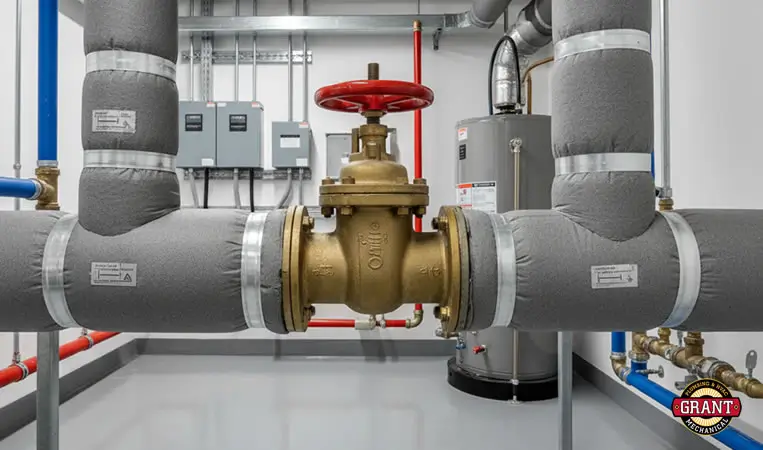
- Use Quality Materials: Use professional-grade pipe sleeves or insulation wraps. For sprinkler systems, ensure all feed lines and risers are adequately protected accordingG to code.
3. Seal All Air Leaks
Cold air infiltration is a pipe’s worst enemy.
- Conduct an Inspection: Thoroughly inspect the building’s exterior. Look for cracks in the foundation, gaps around windows and doors, and openings for utility lines.
- Caulk and Weatherstrip: Use caulk and weatherstripping to seal any and all drafts. This not only protects your pipes but also improves the building’s overall energy efficiency.
4. The Professional Shutdown: Winterize the System
If the property will be vacant for an extended period, the most comprehensive solution is a professional winterization. This is not a recommended DIY task for a commercial property, as missed steps can lead to severe damage. A professional winterization typically involves:
- Shutting off the main water supply to the building.
- Draining all water from the entire plumbing system.
- Using compressed air to blow out any remaining water from the lines.
- Draining water heaters, boiler systems, and appliance lines.
- Adding non-toxic plumbing antifreeze to toilet bowls, tanks, and all p-traps (sinks, floor drains) to prevent them from freezing and cracking.
Don't Forget the Fire Sprinkler System
This is a critical, often-overlooked component in commercial buildings. A burst sprinkler line can release thousands of gallons of water, destroying inventory, equipment, and structural components.
- Wet vs. Dry Systems: Wet systems are particularly vulnerable and must be kept warm. Dry systems are designed for cold environments, but even they have components (like the riser room) that must be protected from freezing.
- Professional Service: Your fire protection system must be winterized by a qualified professional to ensure it remains compliant and functional while being protected from the cold.
Trust Your Traverse City Commercial Plumbing Experts
A vacant property doesn’t have to be a liability this winter. Taking proactive, professional steps is the key to protecting your investment from the costly and devastating effects of a burst pipe.
At Grant Mechanical, we understand the unique challenges of maintaining commercial properties in the Traverse City region. Our team has the expertise to perform comprehensive building winterizations, install remote monitoring systems, and provide expert advice tailored to your specific property.
Secure Your Property This Winter
Don’t wait for a polar vortex to test your building’s defenses. If you own or manage a vacant commercial property in Northern Michigan, proactive protection is non-negotiable.
Contact Grant Mechanical today to schedule a professional plumbing assessment or a complete commercial winterization service. Let us help you keep your investment safe and sound, no matter what the weather brings.