
How does a typical HVAC system in a residential home work?
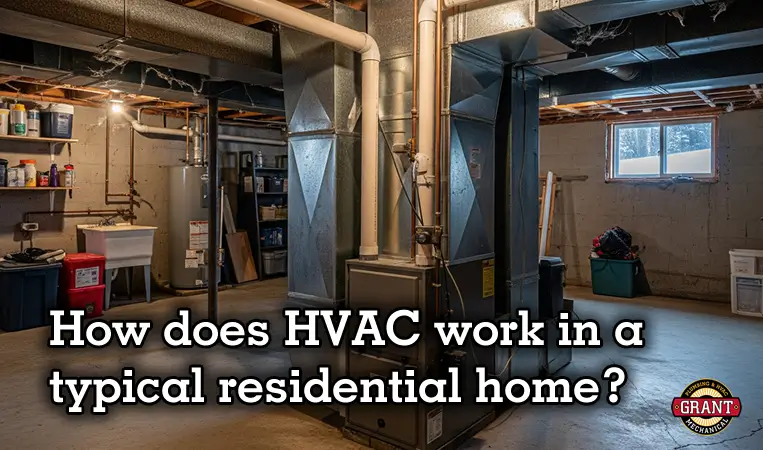
While all HVAC systems share the same core goal of controlling a home’s temperature, humidity, and air quality, a Northern Michigan home’s system is specifically designed to handle our region’s distinct climate—bitterly cold winters and humid, warm summers.
Here’s a breakdown of how a typical Northern Michigan residential HVAC system works, highlighting the components most crucial for our local conditions.
The Heating Cycle: Battling Northern Michigan Winters
The primary focus for an HVAC system in Traverse City is, without a doubt, heating. When the thermostat signals that the indoor temperature has dropped below your set point, the heating cycle begins.
Thermostat Call for Heat: The thermostat, the “brain” of your system, sends a signal to your furnace.
Combustion: Inside the furnace, a natural gas or propane burner ignites, heating a metal component called a heat exchanger.
Heat Transfer: The blower fan pulls cool air from your home’s return ducts and blows it over the hot heat exchanger. This process transfers heat to the air without mixing it with the combustion fumes.
Air Distribution: The now-heated air is pushed through a network of ducts and out through supply vents located throughout your home. This is a forced-air system, which is the most common type of heating in Northern Michigan.
Cycle Completion: The heated air rises, and as it cools, it’s drawn back into the return ducts, starting the cycle over again. This continues until the thermostat’s set temperature is reached.
The Cooling Cycle: Staying Comfortable in the Summer
While summers here are shorter, they can be surprisingly warm and humid. The cooling system, usually a central air conditioner, works to remove heat and moisture from the air.
Thermostat Call for Cool: When the thermostat detects that the temperature is too high, it signals the air conditioning unit.
Refrigerant Circulation: The air conditioner uses a chemical refrigerant that circulates between an indoor coil (the evaporator) and an outdoor unit (the condenser).
Heat Absorption: A blower fan pulls warm, humid indoor air over the evaporator coil. The cold refrigerant inside the coil absorbs the heat and moisture from the air.
Heat Release: The now-hot refrigerant travels to the outdoor condenser unit. Here, the heat is released into the outside air. You can often feel warm air blowing out of the top of the outdoor unit on a hot day.
Cooled Air Distribution: The air, now cool and dehumidified, is pushed through your home’s ductwork to cool each room.
Hybrid Systems & Cold-Climate Heat Pumps
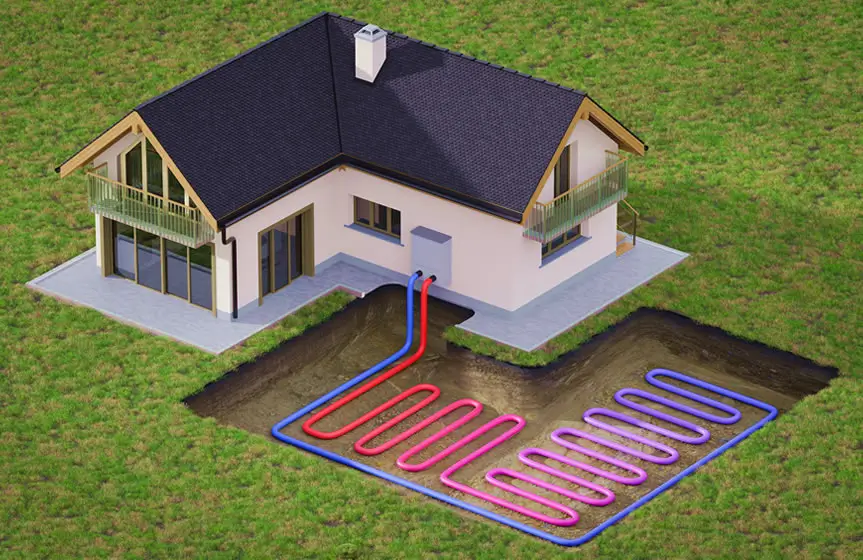
Due to our extreme temperature swings, hybrid or dual-fuel systems have become increasingly popular. These systems combine a high-efficiency heat pump with a traditional gas furnace.
How They Work: A heat pump is incredibly efficient for both heating and cooling in milder weather. It moves existing heat from one place to another rather than creating it. During our milder fall and spring days, the heat pump handles the job, saving on energy costs.
The Switch: When temperatures drop below a pre-set threshold (e.g., around 35°F), the system automatically switches to the more powerful and reliable gas furnace to ensure your home stays warm even on the coldest winter days.
These modern systems are designed to offer the best of both worlds: energy efficiency during shoulder seasons and reliable, powerful heating when you need it most.
The Importance of the "V" in HVAC
The “V” stands for Ventilation, which is crucial for indoor air quality (IAQ). Northern Michigan homes can be tightly sealed to prevent heat loss, but this also traps dust, pollen, pet dander, and other pollutants. Your system’s air filter is the first line of defense, but many homeowners also benefit from supplementary IAQ products like humidifiers or air purifiers.
No matter the season, a properly functioning HVAC system is the backbone of home comfort in Northern Michigan. If you have questions about your specific system or are considering an upgrade to a more efficient hybrid model, don’t hesitate to reach out.
Contact Grant Mechanical for a consultation or to schedule your annual HVAC inspection today!