
Hard Water in Traverse City: Do You Need a Softener?
Living in the Grand Traverse area comes with plenty of perks—stunning lake views, world-class cherries, and a community like no other. But if you’ve noticed white, chalky spots on your glassware or felt like your skin is perpetually dry after a shower, you’re dealing with a common local nuisance: hard water.
At Grant Mechanical, we often get asked if a water softener is a “luxury” or a “necessity” for Traverse City homes. To answer that, we have to look at what’s actually flowing through your pipes.
How "Hard" is Traverse City Water?
Water hardness is measured by the concentration of minerals—specifically calcium and magnesium—found in your supply. In Traverse City, municipal water typically tests at around 10 grains per gallon (GPG).
To put that in perspective, the Water Quality Association classifies anything over 7 GPG as “hard,” and anything over 10.5 GPG as “very hard.” This means Traverse City residents are right on the edge of the “very hard” category. If you use a private well in the surrounding areas, those numbers can climb even higher due to our region’s limestone-rich geology.
Signs Your Home is Struggling with Hard Water
You don’t need a lab coat to tell if your water is hard; your home will usually tell you itself. Look for these common red flags:
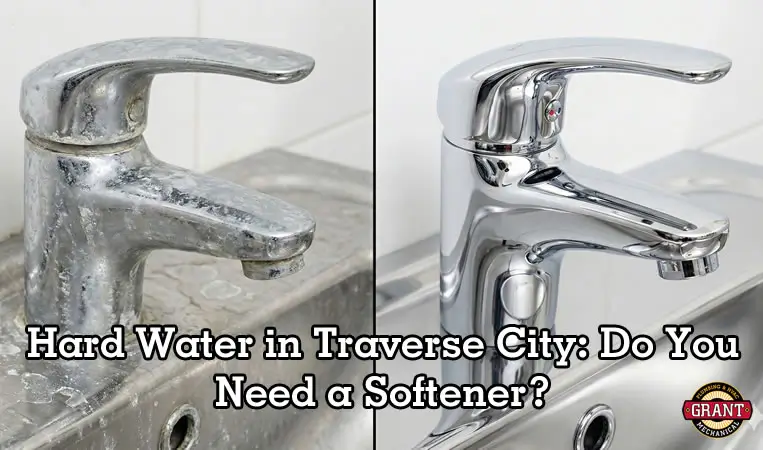
- The “Film” Factor: A white, crusty buildup (limescale) on your faucets, showerheads, and inside your tea kettle.
- Cloudy Dishes: Glassware that looks foggy or spotted, even after a full dishwasher cycle.
- Soap Scum: A stubborn ring around the bathtub that seems impossible to scrub away.
- Low Water Pressure: Over time, mineral deposits can clog your pipes and showerhead aerators, slowing your flow to a trickle.
The Benefits of Making the Switch to Soft Water
Installing a water softener isn’t just about getting rid of spots on your glasses. It’s a systemic upgrade for your entire home.
1. Longevity for Your Plumbing and Appliances
This is where the real savings happen. Hard water is notoriously tough on “water-using” appliances like dishwashers, washing machines, and especially water heaters. When hard water is heated, the minerals “precipitate” out, forming a rock-hard scale inside your tank. This makes your heater work harder, raises your energy bills, and can shorten the life of the unit by years.
2. Healthier Skin and Hair
Have you ever felt “squeaky” after a shower? That’s actually a sign that soap isn’t rinsing off properly. Hard water minerals react with soap to create a sticky residue that stays on your skin, clogging pores and stripping away natural oils. Soft water allows soap to lather easily and rinse away completely, leaving your hair shinier and your skin noticeably softer.
3. Brighter, Softer Laundry
Hard water is abrasive. Those minerals get trapped in the fibers of your clothes and towels, making them feel stiff and scratchy. Over time, it can cause colors to fade and fabrics to wear out faster. Soft water keeps your linens feeling like they did the day you bought them.
Is a Softener Right for You?
While Traverse City water is safe to drink, the “wear and tear” it places on your home is significant. A professionally installed water softener by Grant Mechanical can pay for itself over time through reduced soap usage, lower energy bills, and the avoided cost of premature appliance replacement
Pro Tip: Before you buy a system off the shelf, it’s vital to have your water tested. Different homes require different grain capacities to ensure the system runs efficiently without wasting salt or water.
Let Grant Mechanical Clear Things Up
If you’re tired of scrubbing scale and dealing with dry skin, let’s talk. Our team knows Traverse City water inside and out. We provide expert testing and can recommend a water softening solution tailored to your home’s specific needs.
Ready to see the difference soft water can make? Contact Grant Mechanical today to schedule a water quality consultation and keep your plumbing running smoothly for years to come.

