
Filter Fix: Why Spring Allergies Start in Your Furnace
If you live in Traverse City, you know that our heating systems work overtime during the winter. From October through March, your furnace has been cycling air non-stop to keep your home comfortable against the freezing temperatures.
Now that the snow is melting and we are looking forward to milder days, you might be thinking about spring cleaning. But there is one crucial spot often overlooked: your HVAC filter.
If you are dreading the upcoming allergy season, your “winter filter” might be your worst enemy. Here is why you need to swap it out before the pollen hits—and how to choose the right one.
The Winter Dust vs. Spring Pollen Battle
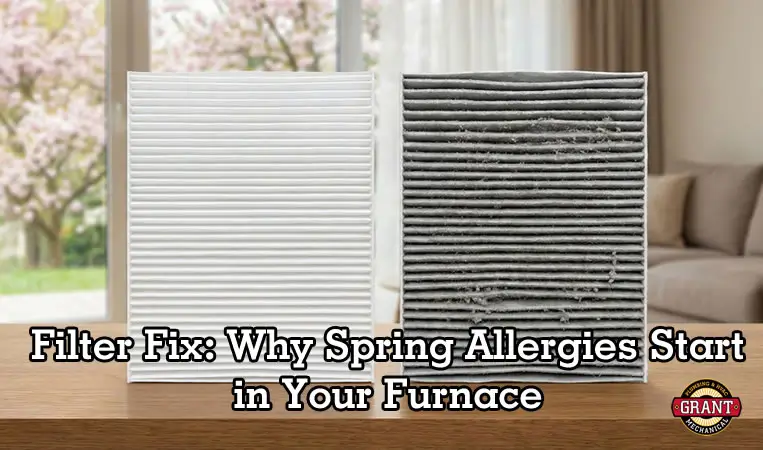
Think of your air filter as a sponge. After months of trapping pet dander, dust mites, and dry winter skin cells, that sponge is full.
When a filter is clogged with winter debris, two things happen:
- Airflow is Restricted: Your system has to work harder to push air through, costing you money and potentially overheating the unit.
- Filtration Fails: Because the filter is already packed with dust, it cannot effectively trap the new invaders—spring pollen and mold spores. Instead of catching them, a dirty system can circulate these allergens right back into your living room.
Understanding MERV Ratings: What You Need to Know
When you head to the hardware store to buy a replacement, you will see a “MERV” rating on the packaging. MERV stands for Minimum Efficiency Reporting Value. It measures how effective the filter is at trapping small particles.
Here is a quick guide for homeowners:
- MERV 1-4: These are basic fiberglass filters. They are designed to protect your furnace from large debris, but they won’t do much for your air quality or allergies.
- MERV 5-8: This is the standard for most residential homes. They catch mold spores, dust mites, and pet dander. Good for general maintenance.
- MERV 9-12: The “Sweet Spot” for allergy sufferers. These filters are denser and can trap smaller particles like legionella, humidifier dust, and lead dust. If you have mild to moderate allergies, this is often the recommended range.
- MERV 13-16: These offer hospital-level air quality, trapping bacteria and virus carriers.
Important Note: Higher isn’t always better! A filter with a very high MERV rating (like 13+) is very dense. If your HVAC system isn’t built to handle that level of resistance, it can restrict airflow so severely that it damages your furnace or AC blower.
The Strategy: Change It Now
Don’t wait until you see the yellow pollen coating your car to change your filter. By then, the allergens are already entering your home.
We recommend starting the season with a fresh filter—ideally a MERV 8 to 11 depending on your system’s capacity—to give your lungs (and your HVAC equipment) a fresh start.
Not Sure Which Filter Your System Handles?
If you want to upgrade your air quality to fight spring allergies but aren’t sure if your furnace can handle a high-MERV filter, give us a call.
At Grant Mechanical, we can assess your current system and recommend the best filtration solution for your specific needs. Whether it’s a filter upgrade or a whole-home air purifier, we are here to help Traverse City breathe easier this spring.
Call to Action: Ready to allergy-proof your home? Contact Grant Mechanical today to schedule your spring HVAC maintenance and air quality consultation!