

Emergency Shut-Offs: Does Your Family Know Where They Are?
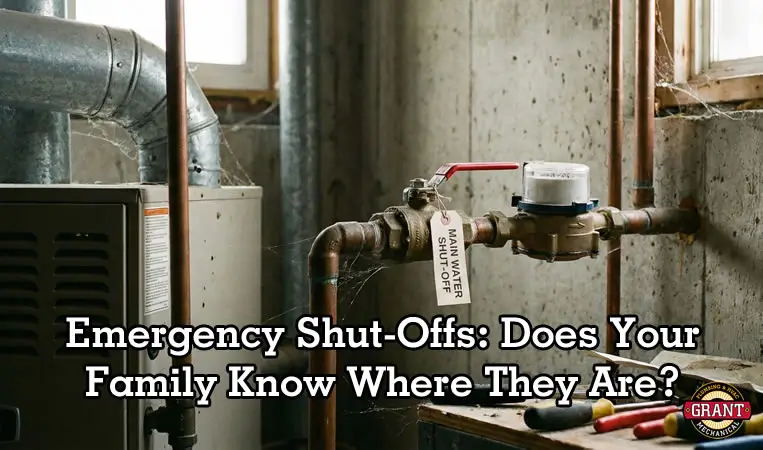
It’s a Tuesday night in Traverse City, the snow is piling up outside, and suddenly, you hear the unmistakable sound of rushing water. A pipe has burst in the basement. In that moment of panic, do you—and more importantly, does everyone in your family—know exactly how to stop the damage?
At Grant Mechanical, we’ve seen how a 30-second delay in finding a shut-off valve can turn a minor repair into a major home restoration project. Here is how to ensure your family is prepared for the unexpected.
1. The Main Water Shut-Off: Your Home’s "Kill Switch"
In Northern Michigan, frozen pipes are a reality. If one bursts, the priority isn’t calling a plumber—it’s stopping the water.
- Where to look: In most Traverse City homes, the main shut-off is located in the basement or crawl space, usually near the front foundation wall where the water line enters from the street. If you are on a well, it is likely near your pressure tank.
- How to use it:
- Ball Valves: These have a straight handle. Turn it 90 degrees so it is perpendicular to the pipe.
- Gate Valves: These look like a circular wheel. Turn it clockwise (righty-tighty) until it stops.
- Family Tip: Tag this valve with a bright “Grant Mechanical” tag or a piece of colored ribbon so it’s easy to spot in the dark.
2. Gas Shut-Offs: Safety First
If you smell natural gas or propane (that “rotten egg” odor), or hear a hissing sound near your furnace or water heater, you need to act fast.
- Individual Appliance Valves: Your furnace, water heater, and gas stove each have their own shut-off valve located on the gas line leading into the unit.
- The Main Gas Meter: Located outside, usually on the side of the house. You will need a 12-inch adjustable wrench to turn the valve a quarter-turn so the “tab” is crosswise to the pipe.
- Crucial Rule: If you suspect a major leak, leave the house immediately before making any calls. Do not flip light switches or use a phone inside, as a tiny spark can be dangerous.
3. The Electrical Panel
Plumbing and HVAC emergencies often involve electricity. If your basement is flooding, you should never walk through the water until the power is off.
- Where to look: Usually in the garage, basement, or a utility closet.
- What to do: Open the panel and look for the Main Breaker (the largest switch, usually at the top). Flipping this kills power to the entire house.
- Family Tip: Make sure the panel is clearly labeled. If “Furnace” or “Sump Pump” isn’t marked, it’s time to spend ten minutes with a marker.
4. Local "Point-of-Use" Valves
You don’t always need to shut down the whole house. If a toilet is overflowing or a kitchen faucet is spraying, look for the small silver valves directly underneath the fixture.
- Pro Tip: These valves can “seize up” if they aren’t moved for years. Once a year, give them a quick turn to ensure they still move freely.
Make it a Family "Scavenger Hunt"
Preparation is a family affair. This weekend, take 15 minutes to walk through your home with your spouse and children. Show them:
- Where the valves and panels are.
- How to turn them (and which tools are needed).
- When it is safe to stay and when they should just get out.
Our Recommendation: Store a flashlight and a crescent wrench in a dedicated “Emergency Spot” near your utility area so you aren’t hunting for tools while water is rising.
Need a Hand?
If you’ve searched your home and still can’t find your main shut-off, or if you’ve found a valve that is rusted and won’t budge, give us a call. The team at Grant Mechanical can help you locate your shut-offs, replace failing valves, and ensure your home is ready for a Traverse City winter.

